Sweden
Loading...
India
Loading...
Collaborative Commenting System
Overview
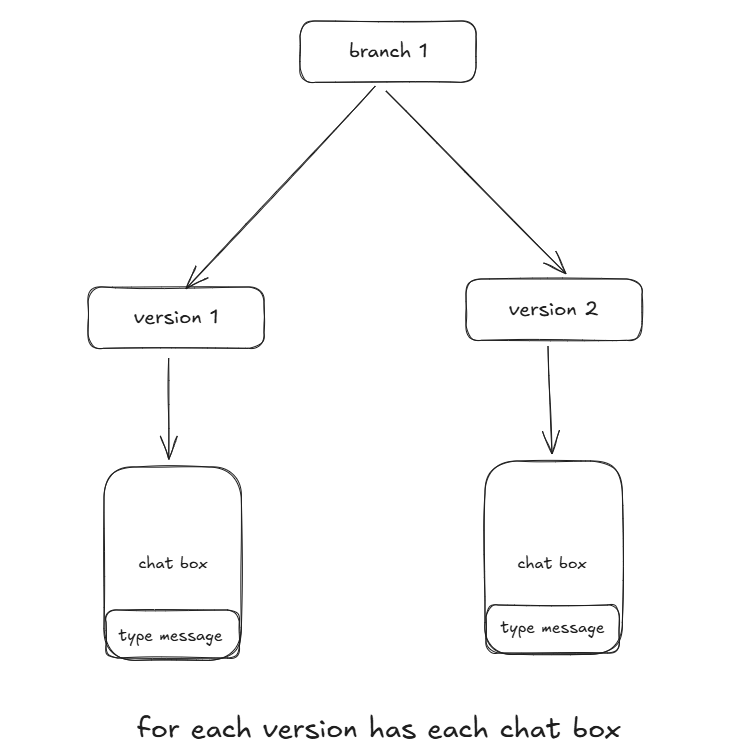
This module introduces a context-aware commenting system into the collaborative System Engineering Tool built using Next.js, React Flow, and Supabase. It enables users working on the same projectId and branchId to communicate contextually using structured comments that can reference users and nodes dynamically.
Objectives
- Allow users to send real-time comments during collaborative sessions
- Enable context tagging using @user and #node patterns
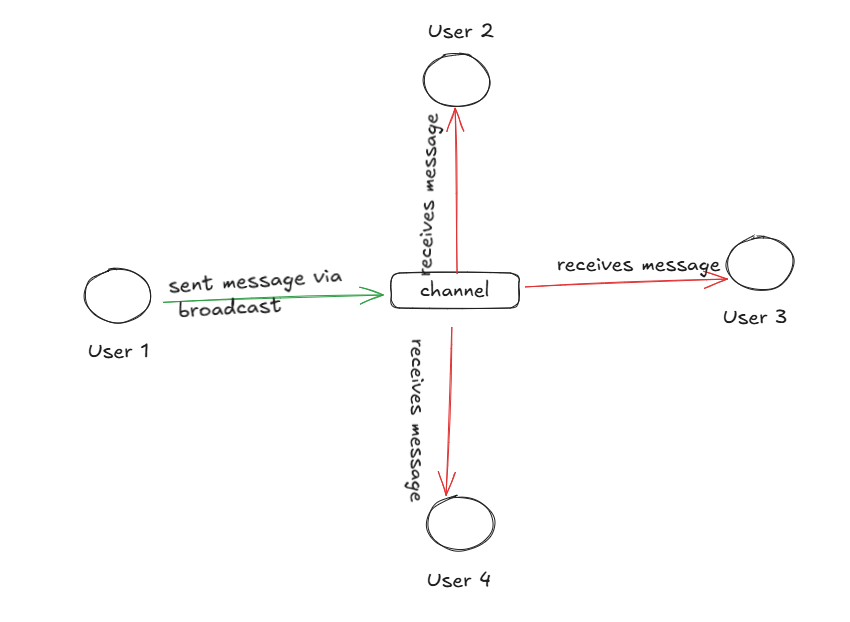
- Display comments immediately to all users in the same project/branch
- Store comments persistently in a database for future reference
- Make the user and node references interactive (e.g., clickable or highlightable)
Comment Syntax and Structure
Users can type structured messages using the following format:
- @username: To mention a user in the project
- #node_name: To refer to a node in the flow
- $edge : To refer to a edge in the flow
- Plain text for general messages or system-like logs
Example Comments:
user12 changed this to freeze
@user_001 Can you review this
#node_123 Needs some change
user12 released this branch
System Architecture
1. Input Parsing
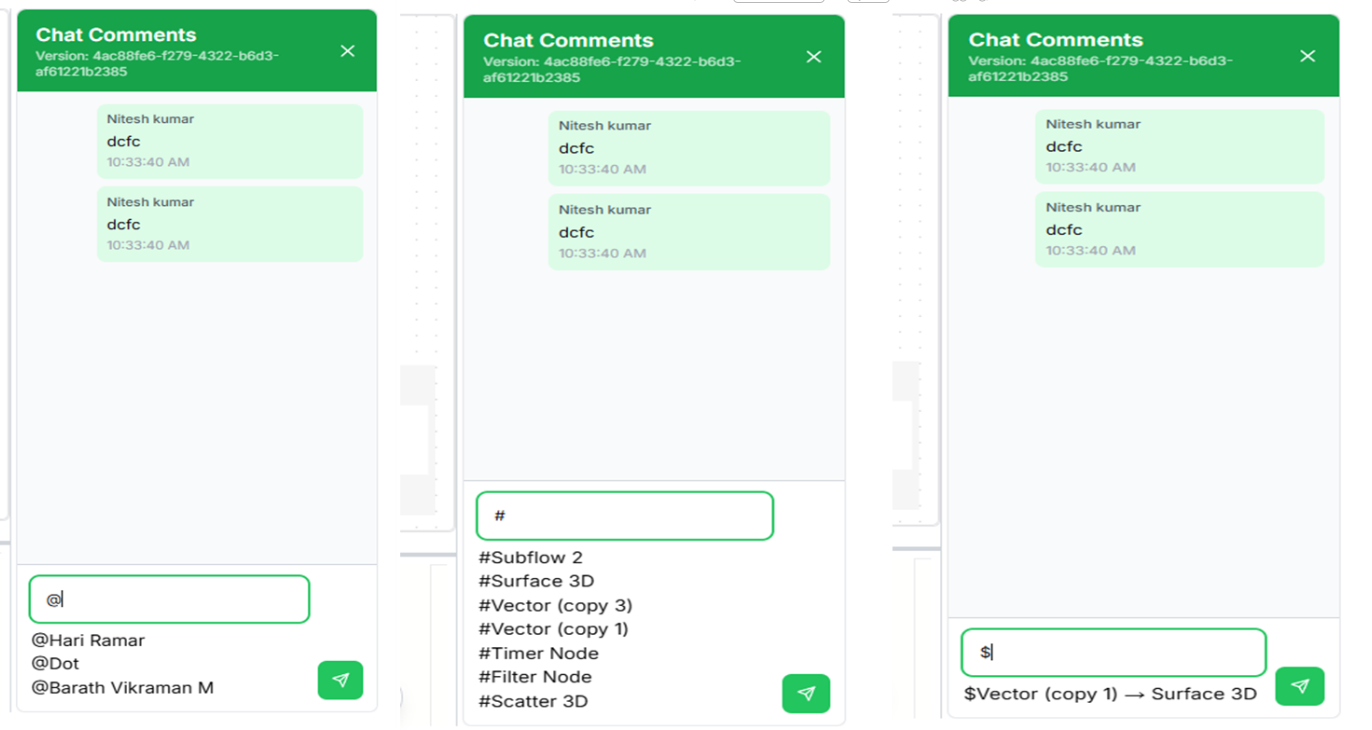
- The system listens for special characters:
@triggers a dropdown of users in the current project#triggers a dropdown of available nodes-
$triggers a dropdown for available edges -
On send, the input is parsed into a structured payload that includes:
- Content
- Mentions (list of user IDs)
- Node references
- Sender ID
- Project and branch context
- Timestamp
2. Realtime Communication
- Supabase Broadcast is used to emit the comment immediately to other users in the same projectId and branchId
- This ensures that all collaborators receive the message in real time
3. Persistent Storage
- After emitting the comment, it is stored in the comments table in Supabase for historical retrieval
- This allows users who join later or refresh the page to still see the full comment history
4. Retrieval and Display
- On project/branch load, comments are fetched from the database
- New comments are also appended via Realtime listeners
- Comments containing @ and # are rendered with stylized components
Database Structure
Table: comment_messages
| Column | Type | Description |
|---|---|---|
| version_id | UUID / TEXT | Uniquely identifies the version |
| content | JSON | Stores the entire conversation as a JSON object |
Example JSON Content
{
  "messages": [
    {
      "message": "This is the first comment",
      "senderId": "user123",
      "timestamp": "2025-09-18T12:00:00Z"
    },
    {
      "message": "This is a reply",
      "senderId": "user456",
      "timestamp": "2025-09-18T12:05:00Z"
    }
  ]
}
Fields:
- "messages" → an array containing all conversation messages
- Each message entry has:
- message → the text itself (raw)
- sender_id → the user who sent it
- timestamp → when it was sent
- The entire chat history of one version is contained inside a single JSON object in the DB